


魔法禁书目录
《上海市加快推进新型工业化构建现代化产业体系“十五五”规划》:支持微型发光二极管、硅基有机发光二极管、柔性显示等技术发展_我的网站

A |
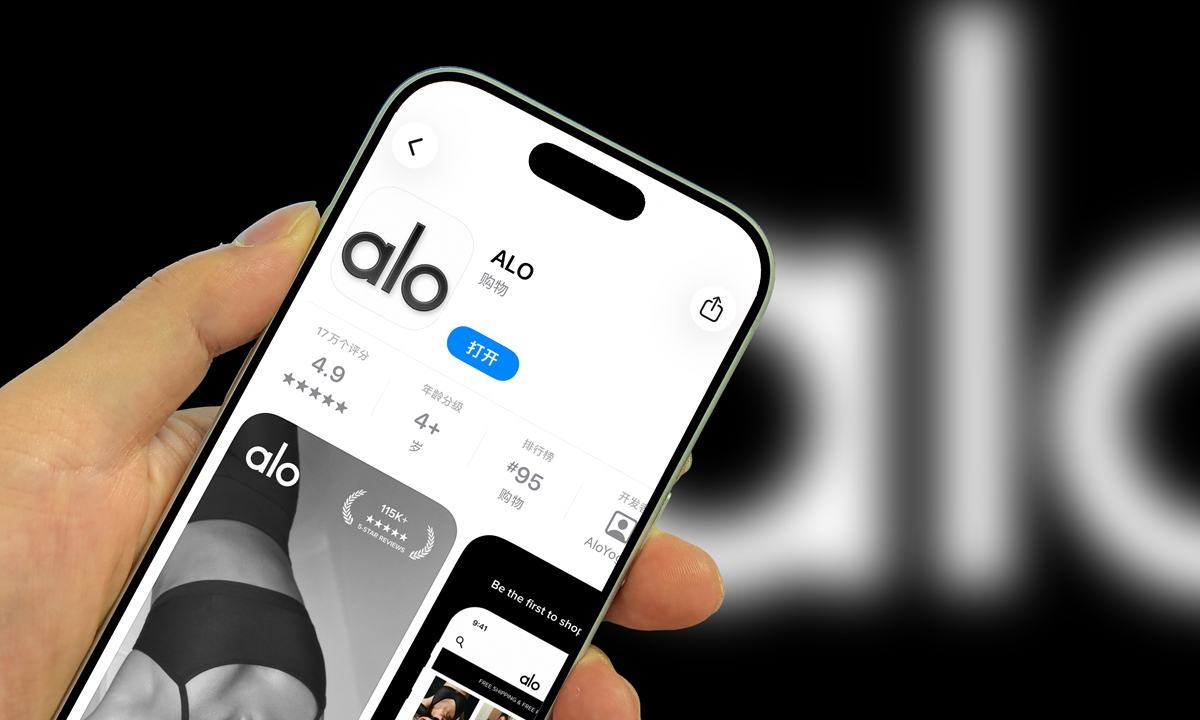
US-based premium activewear and lifestyle brand Alo stepped up its expansion in China on Wednesday, launching an exclusive flagship store on Tmall while preparing brick-and-mortar stores in cities including Beijing and Shanghai, adding to a growing number of US consumer brands entering or expanding in the Chinese market.
With Chinese actress Zhao Lusi featured on its homepage, Alo's Tmall flagship store marks its first official sales channel in China and its only official e-commerce channel on the Chinese mainland, giving consumers direct access without relying on overseas agents or cross-border purchases.
Sales on its Tmall store topped 10 million yuan ($1.4 million) within one minute after final payments for preorders opened at 12:30 am, setting a new opening-day sales record for a new brand in Tmall's sports and outdoor category, the Securities Daily reported.
Industry observers attributed Alo's growing appeal in China to the rise of yoga and Pilates, as well as its blend of performance wear and everyday fashion, which resonates with younger consumers and lends itself to social-media-driven lifestyle marketing.
Industry data showed that China's yoga apparel market is projected to reach $2.65 billion in 2026, suggesting significant growth potential despite intensifying competition from established players such as Canada's Lululemon.
Alo is not an isolated case. A growing number of US consumer brands are entering China or deepening their presence, from opening their first stores to expanding retail networks and testing new formats, highlighting the enduring appeal of China's vast market, increasingly sophisticated consumers, and diverse consumption scenarios.
US fast-food chain Five Guys has also expanded its footprint in China, recently entering Beijing with two stores opening simultaneously at Chaoyang Joy City and Xidan Joy City. The launches drew long queues, with waits exceeding two hours during the lunch rush and scalpers reportedly charging up to 100 yuan to hold spots in line, according to media reports.
Five Guys is far from cheap, with a regular burger priced at 70 yuan and even a small order of fries at 32 yuan. But its 16 customizable toppings offer novelty and choice, helping attract Chinese consumers despite the premium pricing.
Meanwhile, Walmart, which has operated in China for 30 years, reflects the continued commitment of long-established multinationals to the Chinese market.
Walmart has recently opened 20 new community stores in Shenzhen, expanding its presence through a format designed to serve everyday needs in neighborhoods. The company told the Global Times that the format is now expanding beyond Shenzhen, with the first stores in Suzhou and Guangzhou set to open in the second half of the year.
At Walmart China's 30th anniversary event on Wednesday, Walmart China President and CEO Zhu Xiaojing said that the retailer has built an integrated omnichannel network spanning hypermarkets, community stores, Sam's Clubs, front warehouses and distribution centers, with online sales accounting for more than half of its China sales last year.
"We remain confident in the Chinese market and will continue to increase our strategic investment in China," Zhu said, adding that Walmart will further expand its omnichannel presence, deepen community engagement and work with suppliers to strengthen differentiated product offerings, according to The Paper.
The latest corporate moves are also reflected in broader investment data. Actual US investment in China rose 24.5 percent year-on-year in the first four months of 2026, according to China's Ministry of Commerce. More than 3,000 foreign-invested companies increased their investment in China during the period.
Meanwhile, a 2026 survey by the US-China Business Council found that 95 percent of US companies regarded their China operations as important to remaining globally competitive, underscoring China's continued role in their global business strategies.
Wang Peng, an associate research fellow at the Beijing Academy of Social Sciences, told the Global Times that at a time of sluggish global growth, China offers multinational companies a relatively stable source of revenue, while its mature supply chains, logistics networks and large consumer base allow brands to respond quickly to changing demand.
Wang said that the appeal of the Chinese market has also moved beyond sheer population size. Foreign brands are increasingly drawn to opportunities created by more segmented consumption across different city tiers, age groups and lifestyle categories. China's highly developed digital retail ecosystem, including social-commerce marketing, instant retail and integrated online-offline channels, also gives companies a testing ground for new products and business models.
Despite uncertainties in China-US economic ties, Wang said that companies ultimately make investment decisions based on market demand, growth prospects and competitiveness. For many global consumer brands, pulling back from China would mean giving up a vast customer base and leaving more room for competitors.
。 上海市人民政府印发《上海市加快推进新型工业化构建现代化产业体系“十五五”规划》。其中提到,坚持终端创新、强链延链,加快培育新兴动能,重点布局浦东、松江、青浦、静安等区域。全面打造新型智能终端,大力发展AI手机、AI电脑、AI服务器、AI新终端等产品,支持“联合开发+核心零部件”代工新模式。以AI智能体为核心,完善“芯片器件+终端设备+软件设计+内容服务”全产业链生态,培育新物种、新品牌。

B | 加快布局新型通信设备。支持第五代移动通信演进(5G-A)芯片、模组研发,加快第六代移动通信(6G)通信技术产品创新,推动卫星通信设备量产与终端研制。

C | 攻关高精度传感器、激光通信器件等关键装备。前瞻发展下一代显示及超高清视听。支持微型发光二极管(Micro LED)、硅基有机发光二极管(OLED)、柔性显示等技术发展,突破光波导、驱动芯片、核心装备、关键材料等环节,推动超高清视听技术和装备规模化应用。
Current article:http://pxxb.linxiuhuaishuangniuzhenrua.bond/t7hj97l/20260826/4704710.html
Published on:17:45:03